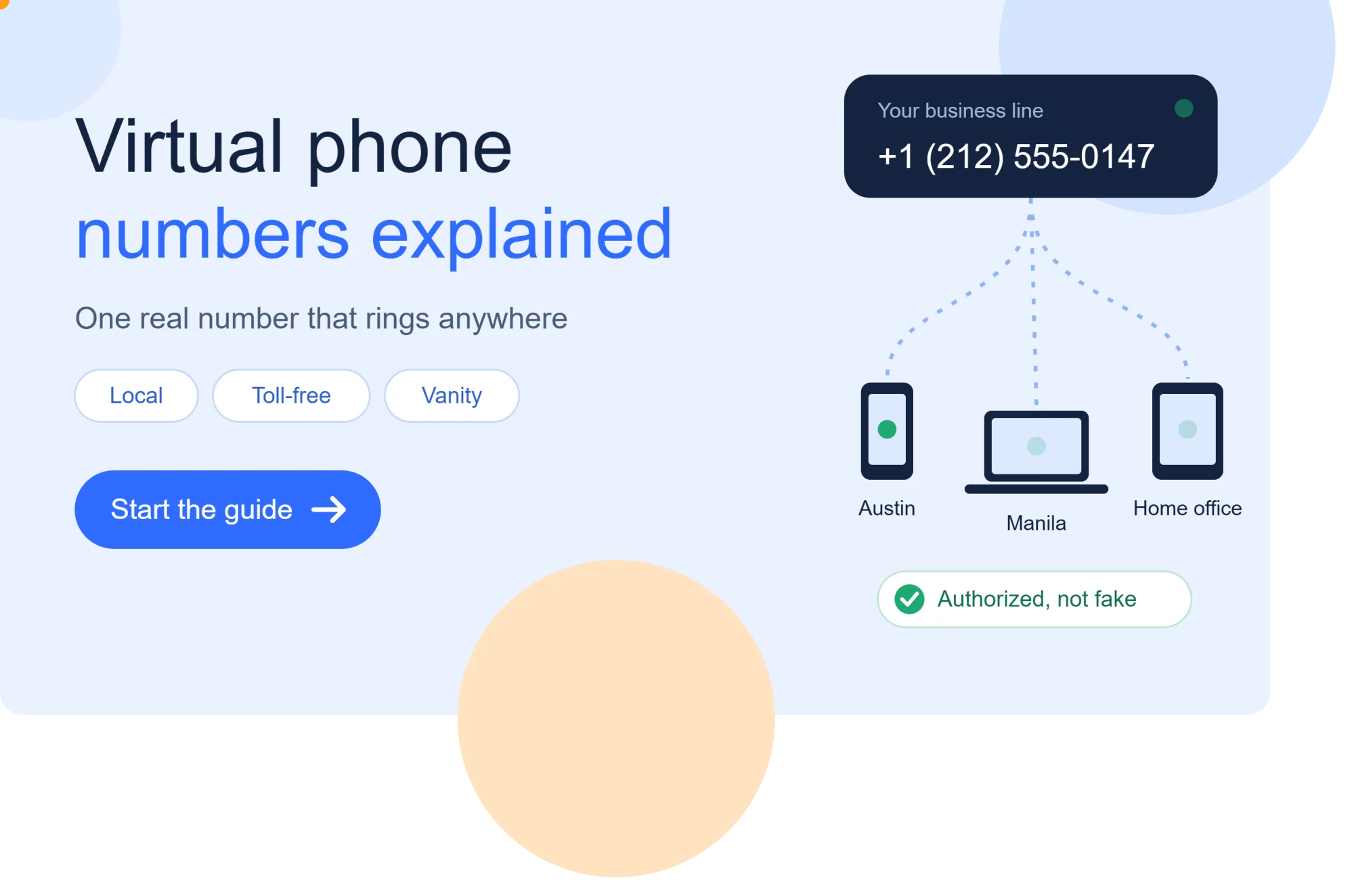
Virtual Phone Numbers Explained
Learn how virtual phone numbers work, who issues them, what they cost, and how to choose a legitimate provider for your business.

VoIP Anchor is independent. No provider pays to be featured or reviewed. Our disclosure
On this page
- What Is a Virtual Phone Number?
- How Does a Virtual Number Route Calls?
- Who Issues Virtual Numbers, and Are They Legitimate?
- How Can a Virtual Phone Number Help a Business Serve Customers Locally?
- How Do Overseas BPO Teams Use Local Numbers?
- What Types of Virtual Numbers Can You Choose?
- How Do You Use a Virtual Number Across Devices?
- What Features Can a Virtual Phone Service Include?
- What Does a Virtual Phone Number Cost?
- Can You Use a Virtual Number for Personal Use?
- How Do You Get a Legitimate US Number and Protect Your Privacy?
- Conclusion
A virtual phone number gives a business a legitimate telephone number without tying it permanently to one traditional phone line, desk phone, or cell phone. A US customer may prefer a familiar local area code, while a distributed team uses the number to receive calls from a supported phone, computer, or app.
This virtual number can help a business present local presence while staff work in another area or country. A virtual phone is not a fake number, and virtual phone numbers are not automatically free or better than traditional phone lines. The provider assigns the number through an authorized system and connects it to the business account.

Depending on the service, teams may use virtual numbers for incoming calls, voicemail, SMS, call forwarding, or other features. The provider may route calls to a smartphone, computer, or app, but internet quality, device access, and service terms affect how people make and receive calls.
This guide explains how a virtual phone number works, what benefits and costs to consider, and how to choose an authorized provider for your business.
What Is a Virtual Phone Number?
A virtual phone number is a real telephone number managed by a service rather than permanently attached to one desk phone, SIM, or physical line. “Virtual” describes how the number connects and is used; it does not mean the number is fake or randomly generated.
A virtual phone number lets people make and receive calls through supported devices instead of one fixed phone line. Depending on the provider, a virtual phone service may support smartphones, tablets, computers, or a web app.
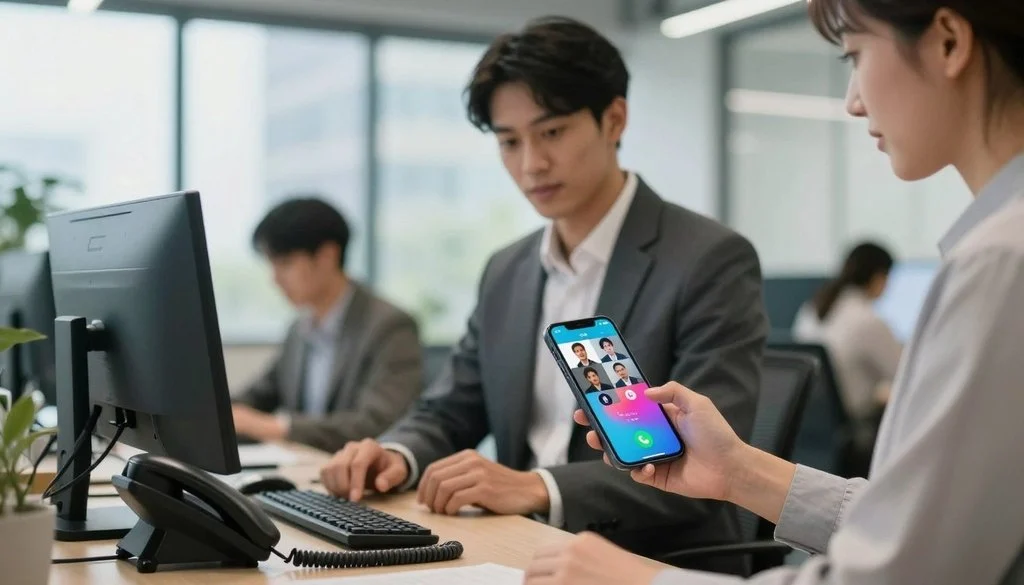
A traditional phone usually connects a phone number to a specific line or handset. A cell phone number may connect to a SIM in one mobile device. With virtual numbers, the provider receives incoming calls and sends them to a device or destination linked to your account.
That destination may be a smartphone, tablet, computer, or another supported device. Some business services allow a team to use the same virtual number on several devices, subject to the provider’s plan and permissions.
A virtual phone number comes from a legitimate numbering system. The provider assigns it lawfully and connects it to tools for handling calls. Depending on the service, those tools may include voicemail, call forwarding, messaging, and other features.
For a business, this arrangement can keep one public phone number while employees work from different locations. An individual may use a separate virtual phone number on an existing device. The key difference is where the number connects, not whether a real person can answer.
How Does a Virtual Number Route Calls?
When a caller dials the number, the provider’s system checks the account’s routing rules and sends the call to the selected destination. The basic path is caller to provider, provider to routing rules, and routing rules to a device or team member.
The number identifies the call, while the service determines where it rings. A virtual phone number uses VoIP technology to carry voice over internet protocol networks rather than requiring a dedicated traditional phone line.

What Happens When Someone Calls?
The provider’s cloud system receives the call and checks which phones, computers, or other devices should ring. A small team might have calls ring several members at once, while another business may send calls to a receptionist and then an available agent.
Routing rules can handle busy lines and unanswered calls. For example, the service may try another destination or send the caller to voicemail after a set number of rings.
How Do Internet Calls Reach Your Device?
With an app-based service, the provider sends the call over an internet or mobile-data connection. The app or web interface alerts the person assigned to answer.
Call quality depends on internet speed, network congestion, and device settings. A computer on weak Wi-Fi may produce poorer audio than a phone on a stable connection. Providers may also offer forwarding when an internet app is unavailable.
Routing directs an assigned telephone number; it does not create one. The number and its call route work only when the provider has obtained the number through a legitimate system.
Who Issues Virtual Numbers, and Are They Legitimate?
A legitimate virtual number comes from an authorized numbering system, not from random digits created by an app. The rules for each phone number, telephone number, and service depend on the country, number type, and applicable regulator.
A virtual number provider cannot invent a valid number or select any area code at will. Availability, identity requirements, permitted uses, and service terms vary by country and region.
How Numbering Authorities Control Number Ranges
National or regional numbering authorities manage number ranges, area codes, and the services that may use them. These numbers are limited public resources, so rules help prevent conflicts and keep phone networks organized.
Eligible telecom operators receive access to approved ranges under local rules. Authorized partners and providers may then assign individual numbers to customers and connect them to calling services.
Those systems support traditional phone lines as well as newer internet-based services. They also allow people and businesses to make calls and communicate across regions while preserving country-specific controls.
What a Virtual Number Provider Actually Does
A virtual number provider works with an eligible telecom operator or authorized partner. It supplies numbers it can lawfully offer and links each number to a service, account, or supported device.
The provider does not create a valid phone number by typing digits into an app. A number that looks local may be unavailable, restricted, or unsuitable for the intended calls.
Before choosing a plan, ask whether the provider can supply the country and area code you need. Confirm identity or residency requirements, permitted use, phone features, and any cost for activation, monthly access, or calls.
Rules may differ between nearby areas, and one provider may offer one code but not another. Compare authorized providers and check the terms before using a virtual phone number for business or personal communication.
Provisioning connects limited numbering resources with real communication needs. The number, service, and provider must all comply with the rules that apply where the number is issued and used.
How Can a Virtual Phone Number Help a Business Serve Customers Locally?
A business can serve customers in a new region by routing calls to a local-facing virtual phone number without placing every team member there. A familiar area code may support local presence and make the number easier to recognize.
A local number can connect customers with a remote team, but it does not guarantee trust, local identity, or lower costs. Those benefits depend on service quality, provider terms, staffing, and how the business handles calls.
Give Customers a Familiar Way to Call
Customers may recognize a regional phone number more easily than an unfamiliar international number. That familiar format can make it simpler to decide where to call for help.
The number alone does not make a business local. The company should clearly identify itself and explain what support the team provides.
Sales or support staff can answer from another city or country while the provider routes each call to the assigned team.
Support a Distributed Team Without Building a Local Phone System
A distributed team can use virtual phone numbers, supported apps, or a managed service instead of installing a separate traditional phone system in every area.
This may reduce some infrastructure costs, but the business still needs staff, devices, network access, and reliable customer-support processes.
One public number can give customers a clear route into the business. The team can set who answers, when calls are transferred, and what happens when nobody responds.
Balance Operating Costs Against Service Needs
Lower costs are possible but not automatic. Provider charges, call volume, staffing, coverage hours, and service expectations affect the total cost.
A business may spend less on local infrastructure but more on agents, training, or call handling. Compare the full operating model rather than only the monthly number charge.
Reliable answers, clear company information, and careful data handling matter more than an area code alone. Before launch, define the team’s schedule, missed-call process, and customer-data permissions.
A similar setup can support outsourced sales or customer service. For example, a US business may obtain an eligible US phone number and route calls to an overseas support team in India or the Philippines.
How Do Overseas BPO Teams Use Local Numbers?
The customer calls the US number, while an authorized service connects the call to agents using supported devices or a contact-center system. The agent’s location does not determine the number’s area code.
The business chooses an eligible number, configures the call route, and gives the team appropriate access. Agents might handle sales inquiries, order questions, billing issues, or account support.
Actual labor costs and service results vary by location and operation. The company should also consider training, supervision, data security, and call coverage before outsourcing.
What Types of Virtual Numbers Can You Choose?
A regional sales team, national help line, or advertising campaign may require a different number format. Choose based on the audience, coverage, routing needs, and applicable rules.
Local numbers use geographic area codes, toll-free numbers provide a broader contact option, and a vanity number uses a memorable letter or digit pattern when available.
Local Numbers and Area Codes
A local number has an area code associated with a geographic region. It may help customers recognize the service area, but it does not prove where the business or team works.
Before choosing a virtual phone number for the United States, confirm which area codes the provider can lawfully supply. Some businesses use separate numbers for different regions when the service supports routing or tracking.
Toll-Free and Vanity Numbers
A toll-free number offers one contact point across a wider area and does not use a geographic area code in the same way as a local number. Check the provider’s terms to understand caller charges and business costs.
A vanity number may use letters that spell a word or a memorable digit sequence. Availability is limited, and the provider can explain the available formats.
Any supported number type can route calls to a remote team. Select the number that fits the audience, service area, expected calls, and customer contact habits.
How Do You Use a Virtual Number Across Devices?
A small team can answer one business number on several supported devices, including smartphones, tablets, and computers. Most setups use a provider’s app or web interface to connect each device to the service.
An app-based call needs a reliable internet or mobile-data connection, but not a dedicated phone line or SIM card. Device support, account permissions, and call forwarding options vary by provider.
Use an App on the Devices You Already Have
Install the provider’s app on a supported phone, tablet, or computer. Some virtual phone services also allow users to sign in through a web browser.
Each team member may need an account or permission to answer calls. Service settings determine which devices can ring and who can access the virtual phone number.
Wi-Fi or mobile data carries the call between the device and the service. An internet connection is different from a dedicated phone line, so a weak or interrupted connection may prevent the app from receiving calls or reduce audio quality.
Check compatibility before setup. Older operating systems, workplace restrictions, or unsupported devices may limit which apps and features the team can use.
Forward Calls When an Internet App Is Not the Best Fit
Some providers offer call forwarding to an existing landline or cell phone. This can help when an app is impractical for a team member or when the business needs a backup route.
Forwarding may use another phone number and may create additional charges. Review the service terms, coverage, and forwarding limits before depending on it.
Test the team’s actual phones, internet access, and backup route before publishing the number. One person may use the app on a computer while another answers on a mobile device, but clear permissions and handoff rules are still necessary.
Once the connection works, review the service’s call-management and messaging features.
What Features Can a Virtual Phone Service Include?
A virtual phone service may include incoming calls, voicemail, forwarding, messaging, and team tools. Available features depend on the provider, plan, country, and number type.
Check each feature against the team’s needs instead of assuming every plan includes it. Some business plans offer tools that basic calling services do not.
Manage Incoming Calls and Voicemail
Call forwarding can send calls to another supported number or device, while voicemail lets callers leave a message when nobody answers. Some services provide custom greetings, routing rules, voicemail transcription, call monitoring, or scheduling features.
Handle Texting and Team Call Workflows
Some virtual phone numbers support SMS, but texting availability differs by plan, country, number type, and intended use. Confirm that the number can send and receive the messages your business requires.
A free virtual number may limit SMS or account verification, so do not assume it can receive every code or message. Shared call history and team access may reduce missed handoffs, but check who can view calls, messages, and voicemail.
Compare feature limits, user access, charges, and restrictions before choosing a service.
What Does a Virtual Phone Number Cost?
The cost depends on the provider’s plan, number type, region, and how the service is used. A virtual number is not automatically free or cheaper than a traditional phone line.
Providers may charge for activation, access, calls, messages, forwarding, or added features. Some services include setup, while others charge a separate activation fee.
Recurring access is often billed per month. Check whether the monthly price covers one number or several, and review call rates for the destinations your business or team uses.
SMS, international calls, data use, support, call recording, and forwarding may create additional costs. A plan may include limited usage and charge for calls or messages beyond that allowance.
A free virtual phone number may be available, but free offers can limit calling, SMS, features, support, or account access. Compare the total expected cost rather than relying on the word “free.”
Consider call volume, message needs, number of users, required devices, and the provider’s charges if your needs grow.
Can You Use a Virtual Number for Personal Use?
A person may use a separate virtual phone number for a marketplace listing, side business, work, or shopping without sharing a primary phone number. A second number can keep different types of calls and messages separate.
A virtual phone number for personal use can reduce exposure of a primary number, but it does not guarantee anonymity. Provider terms may limit personal uses, SMS, or account verification.
Before using a number for an important account, check whether it can receive the required calls or SMS. Also review how the service stores call records, messages, payment details, and account information.
What Is a Burner Phone Number?
A burner phone number usually means a temporary or secondary number used to limit exposure of a primary number. The term can describe different services and does not guarantee anonymity.
The number may still connect to an account, payment method, device, or provider record. Use it lawfully and follow the service terms.
How Do You Get a Ghost Phone Number?
“Ghost phone number” is informal wording, not a technical number category. It does not make calls invisible or prevent a provider from keeping records.
Choose a legitimate provider and read its privacy and data-retention practices. A label cannot change how a number is assigned or what information the service may retain or disclose under its rules or applicable law.
How Do You Get a Legitimate US Number and Protect Your Privacy?
Choose a carrier or authorized provider that offers the US number type and service you need. Availability, identity checks, residency requirements, and account rules can differ by provider.
Use a virtual phone number assigned through a valid system, and do not treat a virtual number as a way to avoid identification. Privacy can reduce unnecessary exposure, but it is not the same as guaranteed anonymity.
How Do I Get a US Mobile Number?
You can get a US mobile number through a mobile carrier or an authorized service. First, confirm that the provider supports the calls, messages, devices, and features you need.
A provider may request account details or identity information before assigning or activating the phone number. Check whether the number works with your planned apps, phone system, SMS services, or other accounts.
A number described as mobile may not provide the same features as a carrier SIM. Ask how calls, messages, caller ID, device access, and forwarding work before accepting the service.
How Can I Protect My Main Number?
Do not fabricate a phone number or use caller-ID spoofing to misrepresent who is making a call. A random string of numbers may be invalid or may belong to someone else.
If you need to keep your main number private, request a legitimately assigned virtual phone number from a trusted provider. Follow the provider’s rules and do not claim that a made-up telephone number belongs to you.
Can a Virtual Number Be Traced?
A virtual number is not inherently anonymous. A provider may hold records connecting the number to an account, device, payment details, or calls, and other parties may obtain records through lawful processes.
No phone service can guarantee that a call cannot be linked to a person. The records kept and the people who can access them depend on the provider, service, applicable law, and retention policy.
Before sharing sensitive information, review the provider’s privacy practices, data retention, security controls, SMS limitations, and lawful-disclosure policies. Then compare eligible providers based on your purpose, number type, expected calls, costs, and privacy needs.
Conclusion
A virtual phone number is most useful when its routing, number format, and features match a real communication need. It is a real, authorized number that can help a business or remote team handle incoming calls.
Local presence and lower costs are not guaranteed. Before choosing a service, note the required country or area code, users, devices, expected calls and SMS, privacy needs, and any features such as voicemail or forwarding.
Then compare availability, terms, phone-line options, and charges from authorized providers. Select a compliant provider and virtual number based on those requirements rather than on claims of free service, automatic savings, or anonymity.

3 Comments